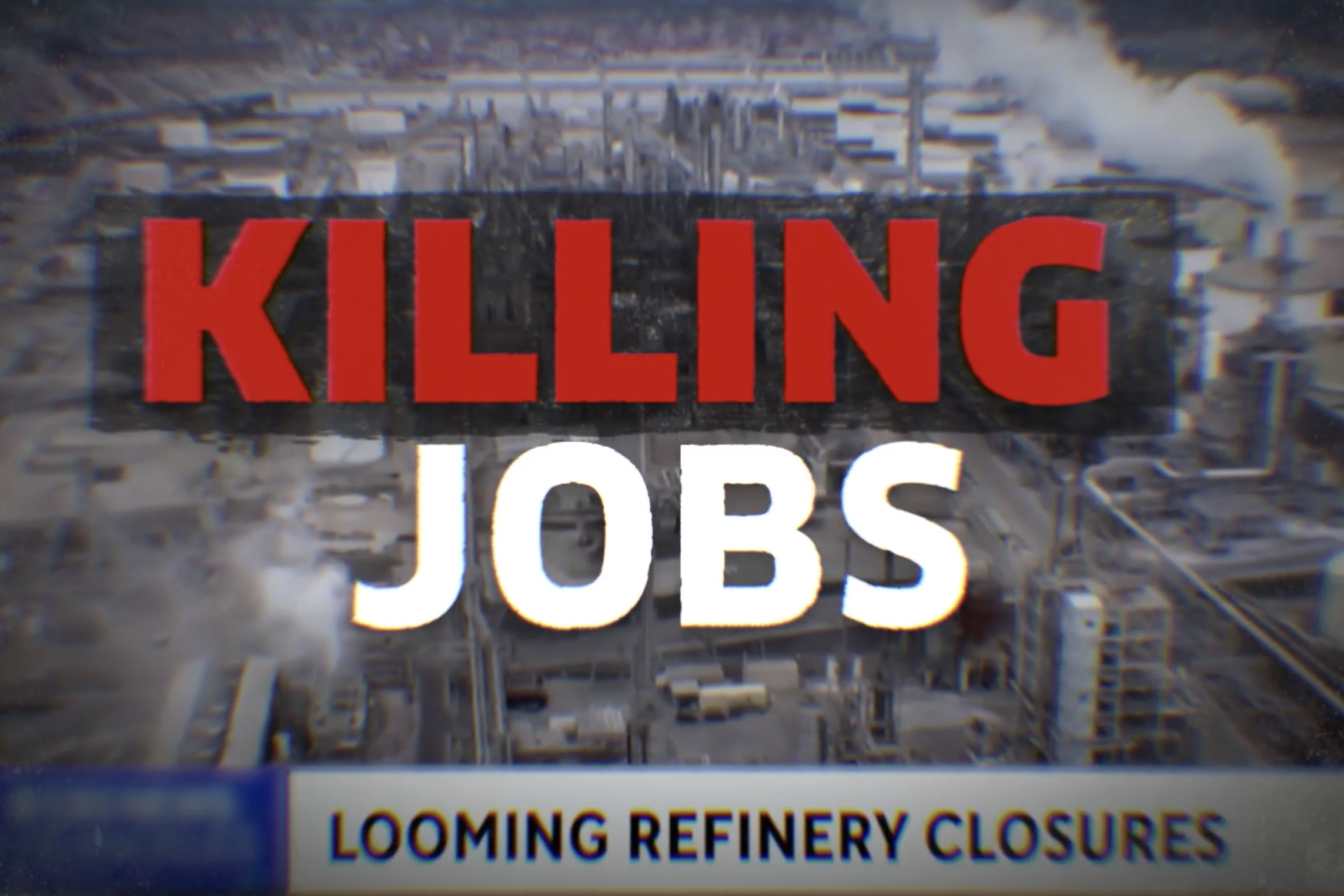
D.C.’s ethanol lobby has teamed up with multinational oil conglomerates to push for higher ethanol mandates under the guise of E15 expansion. Now, America’s mid-size refiners, small refiners, and national labor unions are united in pushing back.
STATE OF PLAY:
-
In February 2026, the Congressional Rural Domestic Energy Council released a draft E-15 expansion framework that failed to address long-standing structural problems with the Renewable Fuel Standard (RFS), the nation’s decades-old ethanol mandate.
-
E15 and the RFS are one issue, because the biofuel lobby has historically stated its desire to use nationwide E15 to push an already achievable ethanol mandate even higher. Large oil companies that control the RFS compliance credits – RINs – have also been asking for higher mandates.
-
A group of mid-size and small refiners united in opposition to that policy framework, warning of risks to domestic refining capacity and outlining clear paths to compromise.
-
The United Association (UA) is now weighing in, underscoring threats to high-quality jobs for its 395,000+ members.
DEEP DIVE:
Earlier this month, the Rural Domestic Energy Council released a draft policy framework to expand year-long E15 sales. However, the proposal failed to address longstanding issues around RFS that have prompted refiners to close and/or convert to renewable manufacturing, resulting in lower refining capacity, less fuel, and fewer jobs.
A group of mid-size and small refiners -- representing 27 refining facilities across 17 states, and nearly 2 million barrels per day of domestic refining capacity -- sent a stark warning to the Council in response:
“The [Council’s] proposed E15 framework tilts the scale in favor of the world’s largest oil and renewable fuel companies... As a result, authorizing year-round E15 sales without appropriate checks in place to contain the costs of the ethanol mandate will result in the closure of certain refining facilities, the loss of good-paying jobs, and increased domestic fuel prices.”
The United Association (UA) of Journeymen and Apprentices of the Plumbing and Pipe Fitting Industry echoed concerns. The union sent a new letter to the Council citing threats to countless union jobs:
“Many of our members are employed by smaller independent refiners, who typically pay more than their larger competitors for compliance credits known as Renewable Identification Numbers (RINs). The skyrocketing costs of RINs in recent years have forced many small refiners to declare bankruptcy and shutter operations, eliminating good-paying UA jobs and weakening our energy supply in the process. These costs will only increase if year-round E15 is sold, threatening countless union jobs like ours.”
As the Council continues to develop potential policy frameworks, mid-size and small refiners, and labor leaders are advocating for E15 legislation that includes RIN cost containment provisions, rather than pushing unachievable ethanol mandates even higher.
In the letter to the Council, mid-size and small refiners laid out a clear path to compromise for E15 expansion, including three straightforward reforms:
1. Preserve Small Refinery Exemptions (SREs) under the existing framework without imposing an artificial cap
2. Prohibit EPA Reallocation of exempted small refinery volumes to other refiners
3. Cap annual ethanol mandates at no higher than the previous year’s actual consumption
Read the Union Association letter to the Council here.
Read FAJC’s full statement ahead of the Council’s initial E15 proposal here.