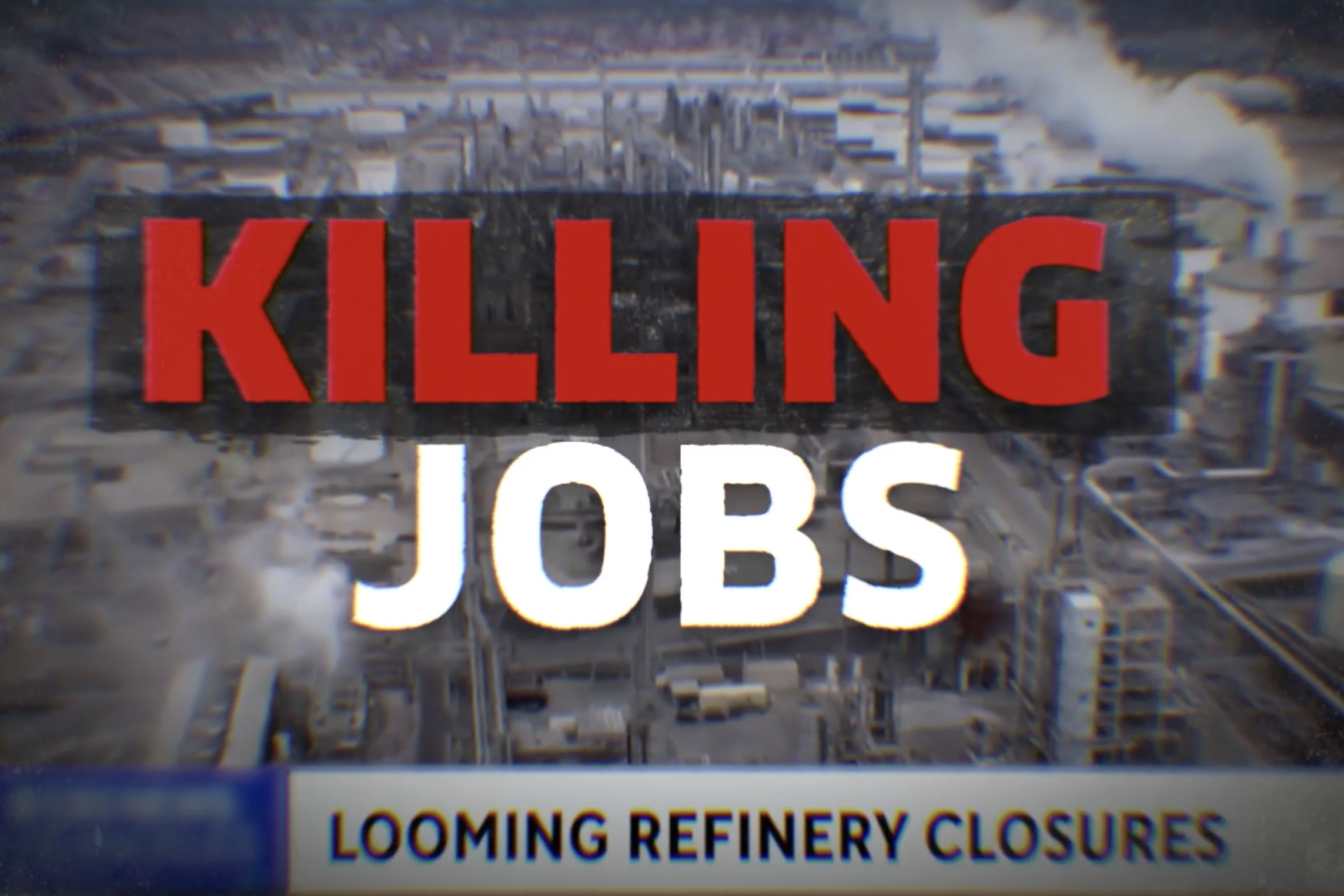
New threats to U.S. refining capacity could derail President Trump’s efforts to strengthen U.S refining capacity, restore refining capacity in the increasingly vulnerable Northeast region, and keep gas prices more affordable for American consumers nationwide.
The threats mirror those President Trump cited in his National Energy Emergency: domestic policies that jeopardize U.S. national defense, security, and economic prosperity. And the call is coming from inside the U.S. House of Representatives.
State of Play:
-
The Environmental Protection Agency (EPA) is finalizing a proposed 15-billion-gallon ethanol mandate for 2026 and 2027 under the Renewable Fuel Standard (RFS), levels detached from real-world fuel demand and existing infrastructure capacity.
-
Now, the Congressional Rural Domestic Energy Council has floated an initial policy framework that fails to address structural issues with the RFS, deepening refiners’ concerns that year-round E15 could push extreme ethanol mandates higher, driving up gas prices and leading to more refinery closures.
DEEP DIVE:
The structural imbalance of the national ethanol mandate -- combined with EPA’s recent proposals -- makes unchecked E15 expansion a direct threat to domestic refining capacity, consumer gas prices, and high-quality union jobs.
Large integrated oil companies control ethanol blending, which is what needs to happen for RFS compliance credits – called Renewable Identification Numbers or RINs – to become available for refiners to use to comply with the nation’s biofuel mandate. Most small and mid-sized refiners do not operate in the part of the supply chain where you can blend ethanol into gasoline due to chemical and infrastructure constraints. Ethanol cannot be shipped through pipelines, so blending must occur closer to retail markets. Refiners without blending capacity, therefore, have little choice but to purchase RINs at volatile prices and from their larger, integrated competitors to maintain RFS compliance .
EPA has proposed a 15-billion-gallon ethanol mandate for 2026 and 2027 under the Renewable Fuel Standard (RFS), levels detached from real-world fuel demand and infrastructure capacity. EPA also proposed shifting the compliance burden for small-refinery exemptions (SREs) onto non-exempt independent refiners. This would shift millions of dollars in new compliance obligations onto facilities that have never been responsible for those volumes.
Meanwhile, even in states where E15 is available year-round, the fuel is sold at only a small share of retail stations, suggesting limited consumer demand. But the ethanol lobby has been explicit that expanding year-round E15 sales creates a pathway to increase ethanol mandates that are already unachievable. And now, policymakers are considering nationwide expansion.
What's at stake:
In recent weeks, the Rural Domestic Energy Council has floated initial policy frameworks that would authorize year-round E15 sales nationwide without meaningful RFS reforms. If E15 expansion advances without reforms to prevent mandate escalation or reallocation, compliance burdens could push more U.S. refiners to the brink of bankruptcy. Here’s what’s at stake: '
-
Independent Refinery Closures: Unpredictable and unsustainable RFS compliance costs have already contributed to at least four independent refinery closures, eliminating more than 80,000 jobs. Some independent refiners currently cite RINs as their highest expenditure, spending more on compliance than on salaries, benefits, maintenance, and utilities combined.
-
Higher Gas Prices: Since January 2025, RIN prices have increased by 75 percent, adding an estimated 20–30 cents per gallon to fuel costs. Many describe this as a hidden biofuel tax at the pump.
-
Weaker Domestic Refining Capacity: Since 2019, the United States has lost 1.7 million barrels per day of refining capacity. The East Coast, home to roughly one-third of the U.S. population, now relies on just a handful of refineries.
E15 expansion cannot be decoupled from RFS cost containment reforms. Otherwise, the financial pressure could destabilize independent refiners and the communities that depend on them. Read the new warning from U.S. independent and small refiners to the Council here.